
Professional Roofing and Roof Repairs in Cape Town
Free assessment
Cape Town
Residential & commercial
Quality Workmanship
FIND THE CAUSE.
FIX IT PROPERLY.
We assess the property first, then recommend the solution that suits the condition and required results
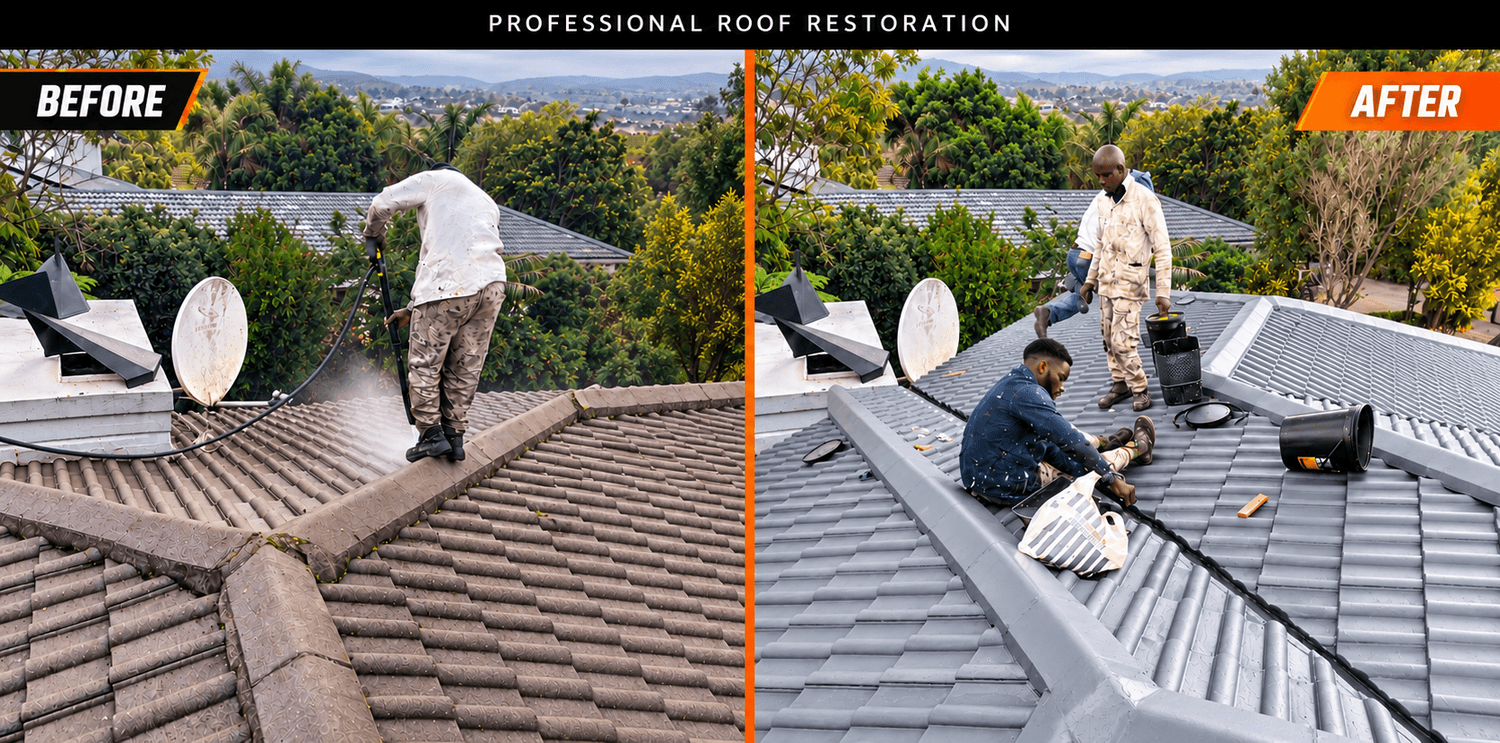
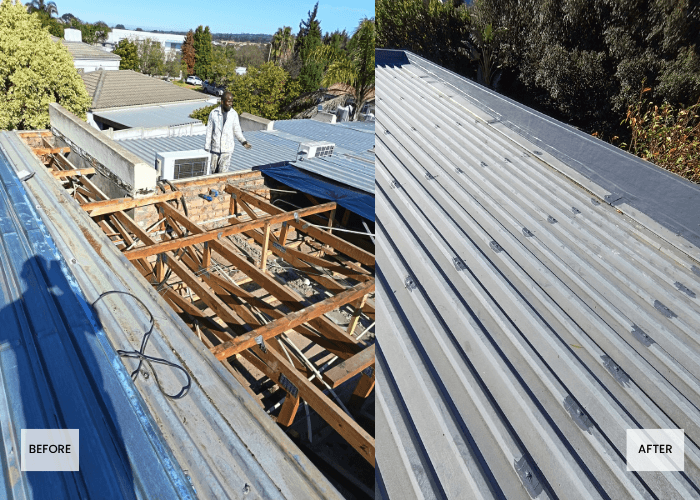
REAL WORK. VISIBLE RESULTS.
HOW IT WORKS
ASSESS. RECOMMEND. COMPLETE.
Our guided ''Quote Planner'' collects the essentials so we can understand your needs before arranging an assessment.


FREQUENTLY ASKED QUESTIONS
Common warning signs include water stains on ceilings or walls, cracked or displaced tiles, rusted roof sheets, damaged flashings, sagging areas, mould, damp smells and water entering during heavy rain. A professional roof inspection can determine the cause and extent of the damage.
Yes. We inspect the roof covering, ridges, valleys, flashings, waterproofing, gutters, roof penetrations and other vulnerable areas. After the assessment, we explain our findings and recommend an appropriate course of action.
Yes. We identify the source of the leak before recommending repairs. The visible point where water enters a room is not always directly below the actual roof defect, so a proper assessment is important.
We work on various residential and commercial roofing systems, including tiled roofs, metal roofs, IBR sheeting, corrugated roofing and flat-roof areas. The appropriate repair method depends on the roof material, condition and construction.
A repair may be suitable when the damage is limited and the remaining roof system is still in serviceable condition. Replacement may be recommended when the roof has widespread deterioration, repeated leaks, structural problems or has reached the end of its practical lifespan.
Yes. Damaged, cracked, loose or missing tiles can be replaced where suitable matching materials are available. We also inspect the surrounding tiles and supporting roof components for additional damage.
Flashings help prevent water from entering around chimneys, walls, valleys, roof joints, pipes and other penetrations. Damaged, poorly installed or deteriorated flashings are a common cause of roof leaks.
Yes. We assess storm-related damage such as displaced tiles, damaged roof sheets, compromised flashings and water entry. Where possible, we recommend responsive remedial work to help protect the property from further damage.
Yes. Planned roof maintenance can identify developing problems before they become expensive repairs. Maintenance may include inspections, minor repairs, replacing damaged components and attending to vulnerable roof areas
We generally recommend having your roof inspected at least once a year and after severe storms or unusually strong winds. Older roofs or properties with recurring problems may require more frequent inspections.
The timeframe depends on the size of the roof, the type and extent of damage, material availability and weather conditions. Minor repairs may be completed quickly, while larger restoration or replacement projects will require more time.
Most roofing work requires suitable dry and safe weather conditions. Rain, strong winds or wet roof surfaces may delay work because they can affect worker safety, surface preparation and the performance of certain roofing products
Yes. Once the property has been assessed and the required scope of work established, we provide a quotation for approval. No additional work should be undertaken without discussing it with you first.
Guarantees depend on the type of work completed, the condition of the existing roof and the materials or systems used. Any applicable workmanship or product guarantees will be explained as part of the quotation.
In many cases, yes. If the problem is isolated and the surrounding roof remains in good condition, targeted repairs may be sufficient. A roof inspection is needed to confirm whether a localised repair will provide a reliable solution.
Yes. Joints, cracks, flashings, pipes, outlets and other penetrations are common water-entry points. We assess these areas and use suitable detailing or sealants where appropriate.
Yes. Metal roofs can develop problems around fasteners, overlaps, flashings, penetrations and rusted sections. Depending on the condition of the roof, repairs may include replacing damaged components, treating affected areas, sealing vulnerable points or recommending replacement.
The process normally starts with you telling us about the problem. We then assess the property, determine the required scope of work and provide a quotation. Once the quotation is approved, the work is scheduled for a suitable date.
It is helpful for someone to provide access and explain any visible signs of leaking or damage inside the property. However, the arrangements will depend on the property and the areas that need to be inspected.
It is helpful for someone to provide access and explain any visible signs of leaking or damage inside the property. However, the arrangements will depend on the property and the areas that need to be inspected.
TELL US WHAT YOUR PROPERTY NEEDS.
Build the brief. Get the right quote.
No onligation.

Professional property solutions across Cape Town and Surrounding areas
SERVICES
Qonstrukt
Cape Town, South Africa